Most people think money problems come from huge purchases or expensive lifestyles.
Honestly, that’s usually not true.
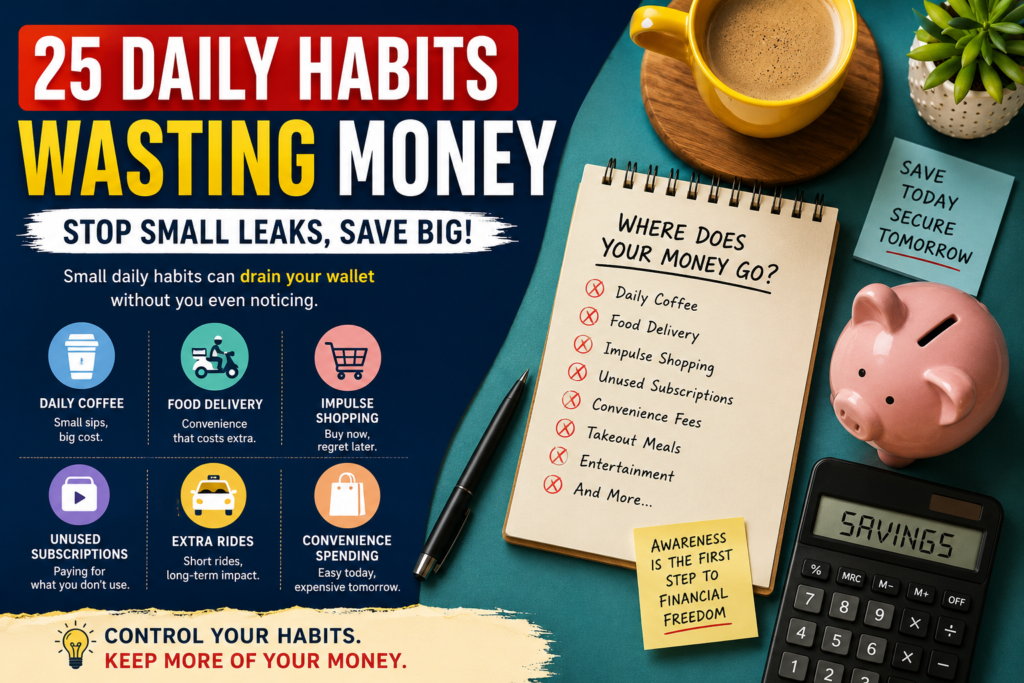
For most people, money quietly disappears through small everyday habits that don’t seem serious in the moment. A coffee here. A food delivery there. Another subscription renewal you forgot about.
Individually, these purchases feel harmless.
Together, they slowly drain your finances.
I realized this myself after checking my bank statement one month and wondering where my money actually went. It wasn’t one huge expense. It was dozens of tiny habits repeated almost daily.
That’s why understanding daily habits wasting money matters more than people think.
The good news is you don’t need extreme budgeting or a miserable lifestyle to fix them. Small realistic changes usually make the biggest difference.

Why Daily Habits Wasting Money Can Hurt Your Finances
Small expenses feel harmless because they don’t look important individually.
But repeated spending adds up surprisingly fast.
| Daily Spending | Monthly Cost | Yearly Cost |
|---|---|---|
| $5 daily | Around $150 | Around $1,800 |
| $10 daily | Around $300 | Around $3,600 |
Many people ignore daily habits wasting money because the amounts feel too small to matter.
That’s exactly why these habits become dangerous over time.
1. Ordering Food Too Often
Food delivery apps make spending incredibly easy.
You’re tired after work, cooking feels annoying, and ordering food takes less than two minutes.
The problem is the total cost is rarely just the meal price anymore.
You also pay for:
- Delivery fees
- Service charges
- Tips
- Extra snacks or drinks
Ordering occasionally is completely fine. But doing it regularly becomes one of the biggest daily habits wasting money.
2. Buying Coffee Every Day
Daily coffee purchases seem small until you calculate the yearly cost.
Simple Example
A $5 coffee every weekday can cost around $1,500 yearly.
That surprises a lot of people.
You don’t need to stop buying coffee completely. Even reducing café visits slightly helps.
3. Shopping When You’re Bored
A lot of online shopping happens because people are bored, not because they truly need something.
You start scrolling casually and suddenly buy random products you never planned to purchase.
Usually boredom spending includes:
- Cheap gadgets
- Phone accessories
- Trendy products
- Clothes on sale
These daily habits wasting money often become automatic over time.
4. Forgetting About Subscriptions
Subscriptions quietly drain money because they become invisible after a while.
Streaming apps, cloud storage, fitness apps, and premium memberships can easily pile up.
Practical Tip
Check your bank statement monthly for recurring charges.
Most people find at least one subscription they barely use anymore.
5. Grocery Shopping Without a List
Shopping without a list usually leads to unnecessary purchases.
Especially when you’re hungry.
You walk into the store needing a few things and somehow leave with snacks, drinks, and random items you never planned to buy.
A grocery list honestly saves more money than people expect.
H2: 6. Wasting Food at Home
Throwing away spoiled food is basically throwing away money.
This often happens with:
- Vegetables forgotten in the fridge
- Leftovers nobody eats
- Expired sauces
- Fruit that goes bad too quickly
Buying realistic amounts helps reduce waste.
7. Paying Extra for Convenience
Convenience usually costs extra.
Examples include:
- Fast delivery upgrades
- Ride-sharing short distances
- Convenience store shopping
- Bottled water daily
None of these are terrible occasionally. The issue starts when convenience spending becomes automatic.
8. Impulse Buying at Checkout Counters
Stores place snacks and cheap products near checkout areas for a reason.
Those small last-minute purchases work extremely well psychologically.
Repeated impulse buying quietly increases spending every week.
9. Stress Spending
A lot of people spend money when stressed.
Buying something new creates a short emotional boost, but the feeling disappears quickly while the spending remains.
Online shopping has made this habit much worse.
10. Driving Short Distances Unnecessarily
Fuel costs add up quickly.
Some people drive everywhere out of habit, even for very short trips.
Walking occasionally saves money and honestly feels refreshing too.
11. Ignoring Small Bank Fees
Bank fees quietly waste money because people stop noticing them.
Examples include:
- ATM charges
- Overdraft fees
- Credit card late fees
- Transfer charges
Small daily habits wasting money can affect long-term financial stability more than people realize.
12. Buying Cheap Low-Quality Products Repeatedly
Cheap products sometimes become more expensive long term.
You save money initially, but the item breaks quickly and needs replacing again.
This happens often with:
- Chargers
- Shoes
- Headphones
- Kitchen tools
Paying slightly more once usually saves money later.
13. Falling for Discounts You Don’t Need
A discount only saves money if you actually needed the product.
Buying unnecessary things at 50% off is still unnecessary spending.
Stores understand this psychology extremely well.
14. Keeping Unused Gym Memberships
This is one of the most common daily habits wasting money.
People join gyms feeling motivated, stop going after a few weeks, then continue paying monthly because canceling feels inconvenient.
15. Upgrading Phones Too Frequently
Modern smartphones already last several years comfortably.
Still, many people replace perfectly good phones every year simply because newer models appear constantly.
Most upgrades are based more on marketing than actual need.
16. Buying Things as Daily Rewards
Rewarding yourself occasionally is completely normal.
But daily “I deserve this” spending becomes expensive quickly.
Examples include:
- Extra snacks
- Expensive drinks
- Random online purchases
Understanding daily habits wasting money helps people make smarter financial decisions.
17. Never Comparing Prices
A few minutes of price comparison can save a decent amount of money.
This matters especially for:
- Electronics
- Insurance
- Internet services
- Flights and hotels
Many people overpay simply because they buy the first option they see.
Learn more about smarter budgeting from
Investopedia
18. Forgetting Free Trials
Free trials are designed to become paid subscriptions quietly.
Simple Habit That Helps
Whenever you start a free trial, immediately set a phone reminder before the renewal date.
imple but effective.
19. Buying Trendy Products You’ll Stop Using
Social media trends disappear quickly.
One month everyone wants a product. A few months later it sits unused in a drawer.
Waiting a few days before buying trendy products helps reduce impulse spending.
20. Leaving Electronics Running Unnecessarily
Leaving lights, chargers, and electronics running unnecessarily increases electricity bills slowly over time.
Simple habits help:
- Turning off unused lights
- Unplugging devices
- Using energy-efficient bulbs
Small savings still matter.
21. Buying Duplicates You Already Have
A lot of people accidentally rebuy products they already own because they forget to check first.
Common examples include:
- Cleaning supplies
- Snacks
- Frozen foods
- Toiletries
Checking before shopping saves money and reduces waste.
22. Paying Full Price for Things That Go on Sale
Some products almost always become cheaper later.
Clothing is a perfect example.
Many people pay full price simply because they want instant satisfaction.
23. Ignoring Preventive Maintenance
Skipping maintenance usually becomes more expensive later.
Examples include:
- Delaying car servicing
- Ignoring small repairs
- Avoiding appliance maintenance
Small problems often become expensive problems later.
24. Spending Too Much on Small Treats
Small treats feel harmless because the purchases seem tiny.
But repeated spending adds up.
Examples include:
- Snacks
- Desserts
- Convenience purchases
You don’t need to remove every enjoyable thing from life. Just become more aware of how often these purchases happen.
25. Never Tracking Your Spending
This is probably one of the biggest financial mistakes people make.
Most people underestimate spending because they never actually look at the numbers.
Even casually reviewing expenses weekly helps you notice patterns you normally ignore.
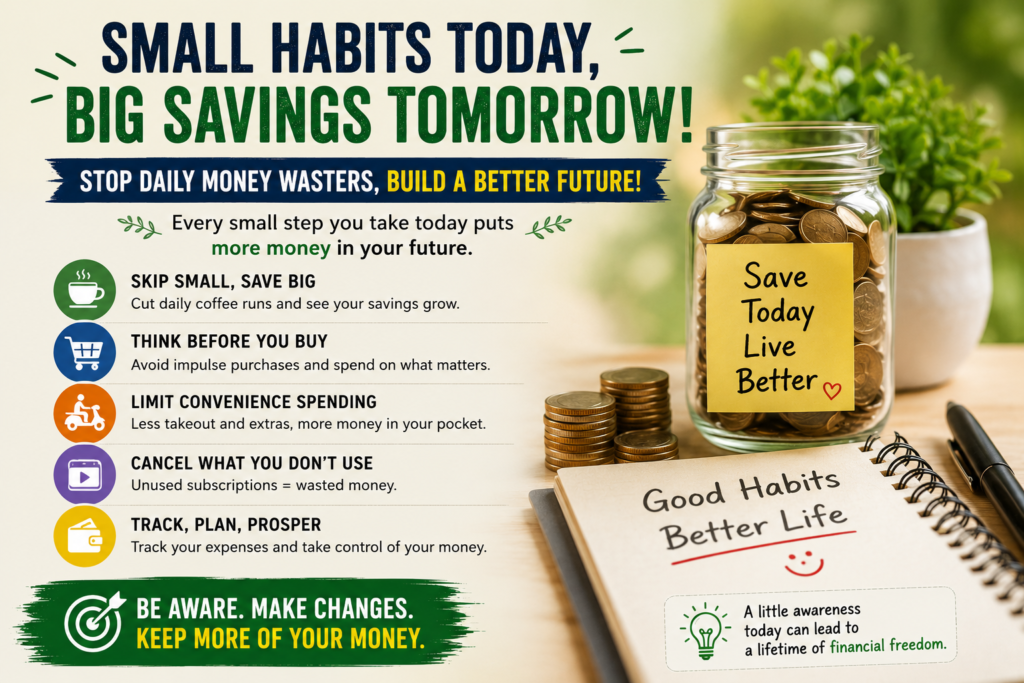
Once you identify the daily habits wasting money in your routine, saving becomes much easier.
How to Stop Daily Habits Wasting Money Every Month
You don’t need extreme budgeting methods to improve your finances.
Usually small realistic habits work best.
Start Small
Trying to fix everything at once rarely lasts.
Focus on two or three habits first.
Pause Before Buying Non-Essentials
Waiting even 24 hours before unnecessary purchases reduces impulse spending significantly.
Review Your Bank Statements
This helps identify subscriptions, hidden charges, and unnecessary spending patterns.
Cook More Meals at Home
Simple home cooking saves a huge amount over time.
You can also check our guide on how to save money fast and our monthly budgeting checklist for more practical tips.
Final Thoughts
Most financial stress doesn’t come from one terrible purchase.
It usually comes from repeated small habits people barely notice anymore.
That’s why daily habits wasting money matter so much.
The goal isn’t to stop enjoying life completely or become extremely strict with spending.
It’s more about becoming aware of where your money quietly disappears.
Once you notice those patterns, saving money becomes much easier without feeling miserable all the time.
FAQs
1. What are the most common daily habits wasting money?
Common habits include ordering takeout frequently, impulse shopping, unused subscriptions, buying coffee daily, and emotional spending.
2. How can I stop wasting money without major lifestyle changes?
Start by tracking spending and reducing small unnecessary purchases gradually.
H3: 3. Why do small daily expenses matter so much?
Small expenses repeat frequently, which makes them add up over time.
4. Is convenience spending always bad?
Not necessarily. The problem starts when convenience spending becomes excessive or automatic.
5. What is the easiest way to save money daily?
One of the easiest methods is reviewing spending habits weekly and cutting unnecessary recurring expenses.