Managing money can feel difficult, especially when monthly expenses continue to rise. The good news is that using the right monthly budget tips can help you take control of your finances without making your life stressful.
A good budget is not about restricting yourself completely. It’s about understanding your spending habits, reducing waste, and making smarter financial decisions.
In this guide, you’ll learn practical monthly budget tips that actually work in real life and help you save more money consistently.
Why Monthly Budgeting Is Important
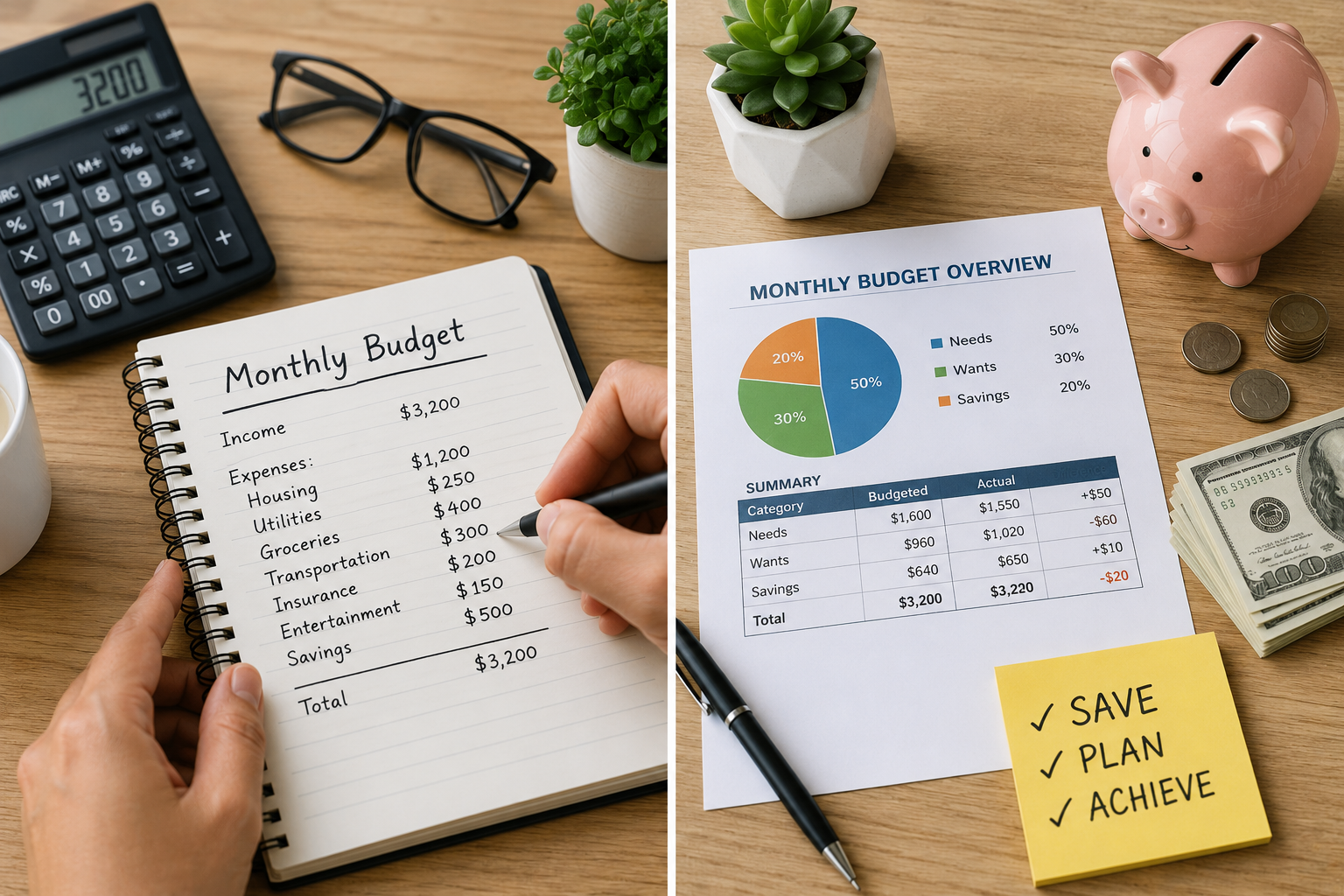
Creating a monthly budget helps you:
- track your income and expenses
- reduce unnecessary spending
- avoid debt and financial stress
- increase savings over time
Without a budget, it becomes very easy to overspend without realizing it.
Good budgeting gives you clarity and control over your money.
1. Track Every Expense
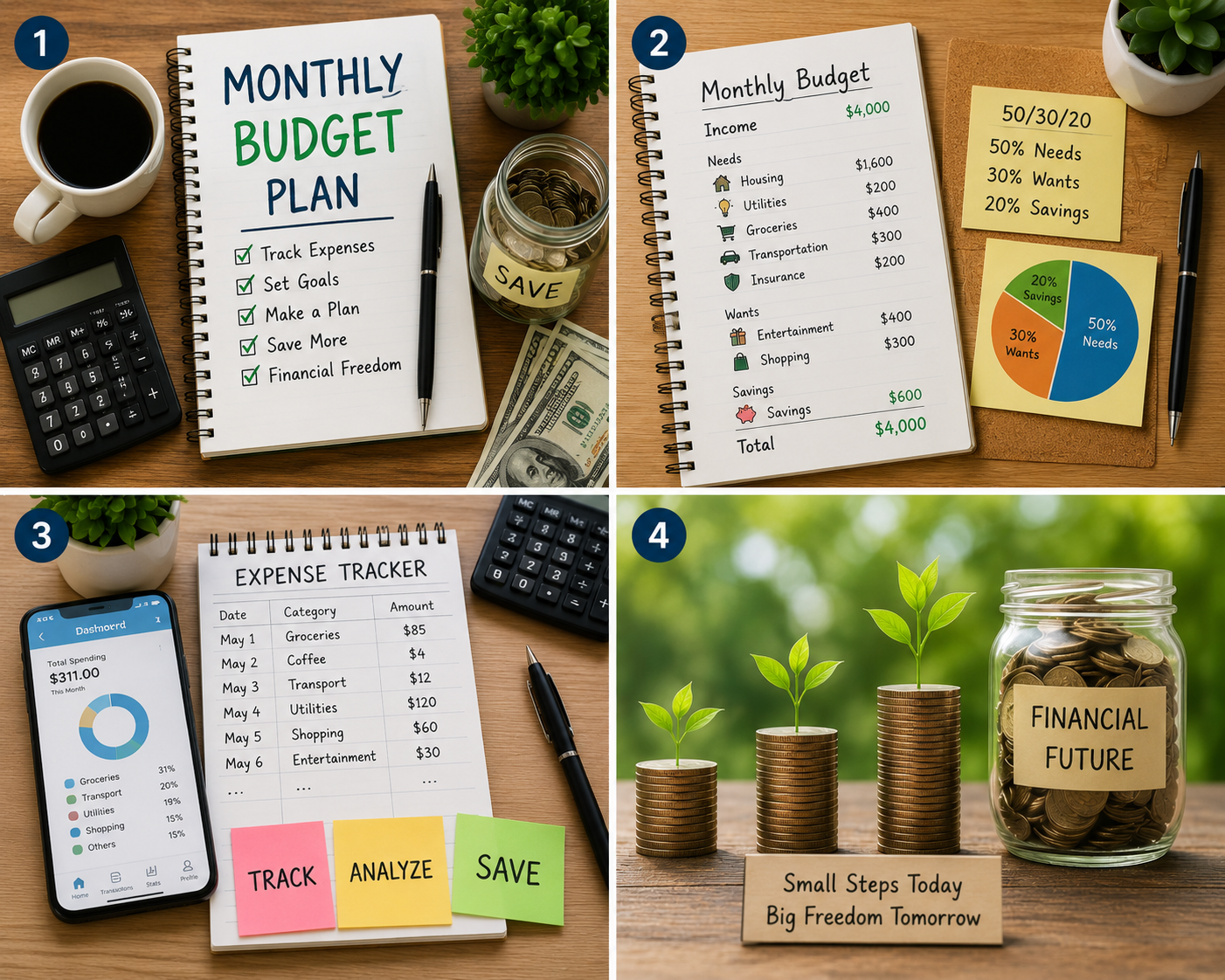
One of the most important monthly budget tips is tracking your spending daily.
Many people underestimate how much they spend on:
- snacks and coffee
- subscriptions
- food delivery
- online shopping
Even small expenses add up quickly over time.
You can track expenses using:
- budgeting apps
- spreadsheets
- simple notes apps
Tracking helps you identify spending patterns and improve financial habits.
2. Create a Realistic Budget
A realistic budget is easier to follow long-term.
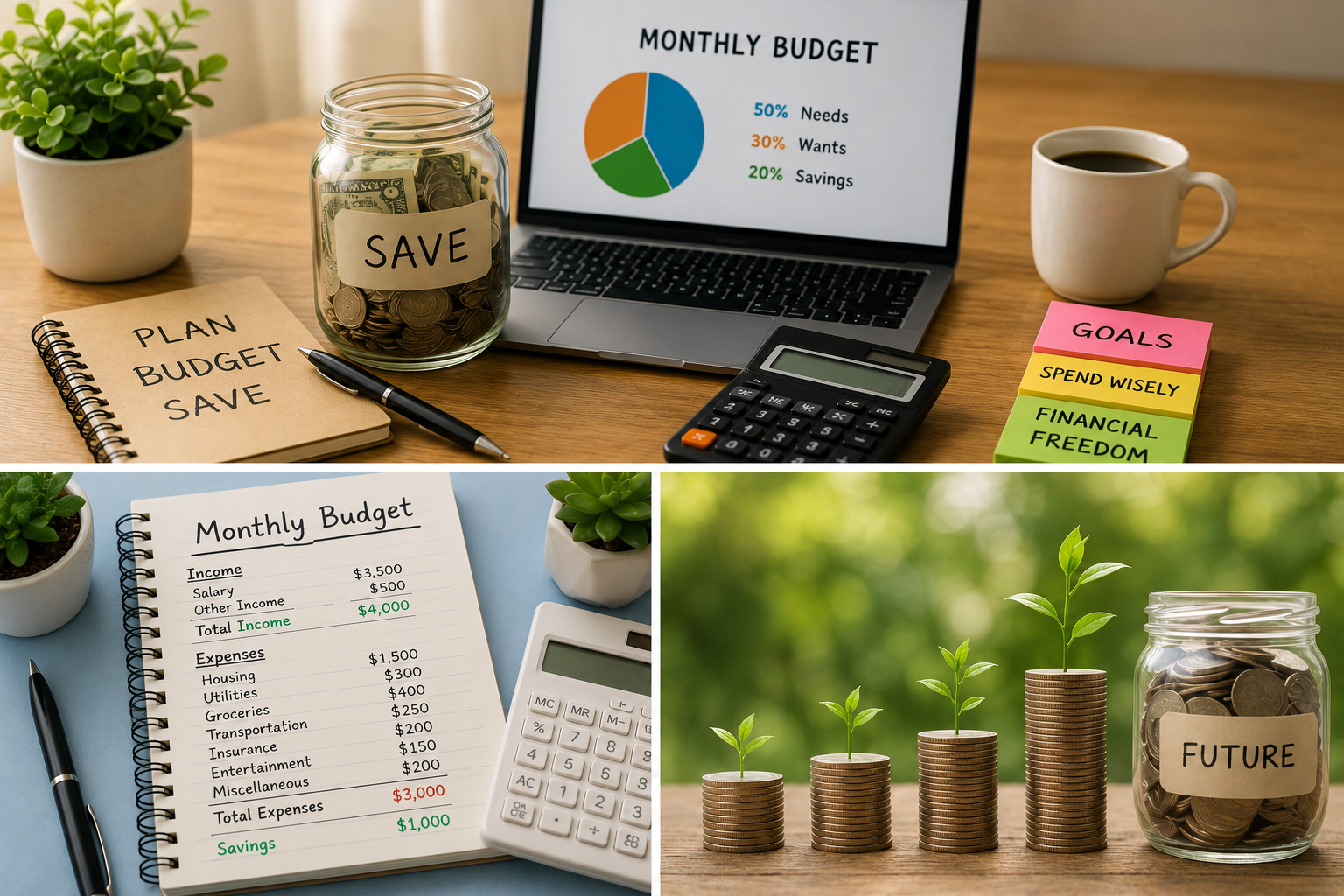
Start with the popular 50/30/20 budgeting rule:
- 50% for needs
- 30% for wants
- 20% for savings
If you want faster financial progress, gradually increase your savings percentage.
Your budget should support your lifestyle while helping you avoid unnecessary spending.
3. Set Clear Financial Goals
Budgeting becomes easier when you have a purpose.
Set goals like:
- saving $500 in 3 months
- reducing monthly expenses
- building an emergency fund
- paying off debt faster
Clear goals help you stay motivated and focused.
4. Reduce Unnecessary Expenses
Reducing unnecessary expenses is one of the most effective monthly budget tips.
Start by cutting:
- unused subscriptions
- impulse purchases
- excessive food delivery
- expensive daily habits
For example, cooking at home a few extra times each week can save a significant amount monthly.
Small improvements create big long-term results.
5. Avoid Impulse Buying
Impulse buying is a major reason why budgets fail.
Before buying anything unnecessary:
👉 wait 24 hours first
This simple habit helps reduce emotional spending and improves financial discipline.
Many purchases lose their appeal after some time.
6. Build an Emergency Fund
An emergency fund protects you from unexpected expenses.
It helps during:
- medical emergencies
- urgent repairs
- job loss
- unexpected bills
Start small:
- first goal → $500
- second goal → $1000
Even saving small amounts regularly builds financial security over time.
7. Use Cash for Daily Spending
Using cash instead of cards can help reduce overspending.
When spending cash:
- you become more aware of expenses
- purchases feel more real
- unnecessary spending decreases
This method works especially well for groceries and entertainment spending.
8. Review Your Budget Every Month
Your financial situation changes over time, so your budget should adapt as well.
At the end of each month:
- review expenses
- identify waste
- adjust spending limits
- improve weak areas
Regular reviews help your budget stay effective.
9. Use Budgeting Tools and Apps
Budgeting tools make money management easier and more organized.
Popular tools include:
- budgeting apps
- spreadsheets
- savings trackers
- banking apps with spending insights
These tools help you monitor progress and stay consistent.
According to financial experts at Investopedia, budgeting tools can improve financial awareness and help reduce overspending.
10. Stay Consistent and Patient
One of the best monthly budget tips is staying consistent.
Budgeting is not about perfection. Some months will be better than others.
The important thing is:
- learning from mistakes
- improving gradually
- staying disciplined over time
Financial progress happens through consistency.
Common Budgeting Mistakes to Avoid
Avoid these common mistakes:
- creating unrealistic budgets
- ignoring small expenses
- not tracking spending
- giving up too early
Fixing these mistakes can improve your financial habits significantly.
Real Life Example of Monthly Budgeting
Imagine someone earning an average monthly income who starts following a budget carefully.
They:
- reduce food delivery spending
- cancel unused subscriptions
- track expenses daily
- cook at home more often
👉 Within one month, they save several hundred dollars without major lifestyle changes.
This shows how powerful simple monthly budget tips can be when applied consistently.
Final Thoughts on Monthly Budget Tips
Using the right monthly budget tips can completely improve your financial habits and reduce stress.
You don’t need complicated systems or expensive tools. Simple habits like tracking expenses, budgeting realistically, and reducing waste can create meaningful financial progress over time.
Start small, stay consistent, and your financial situation will improve step by step.